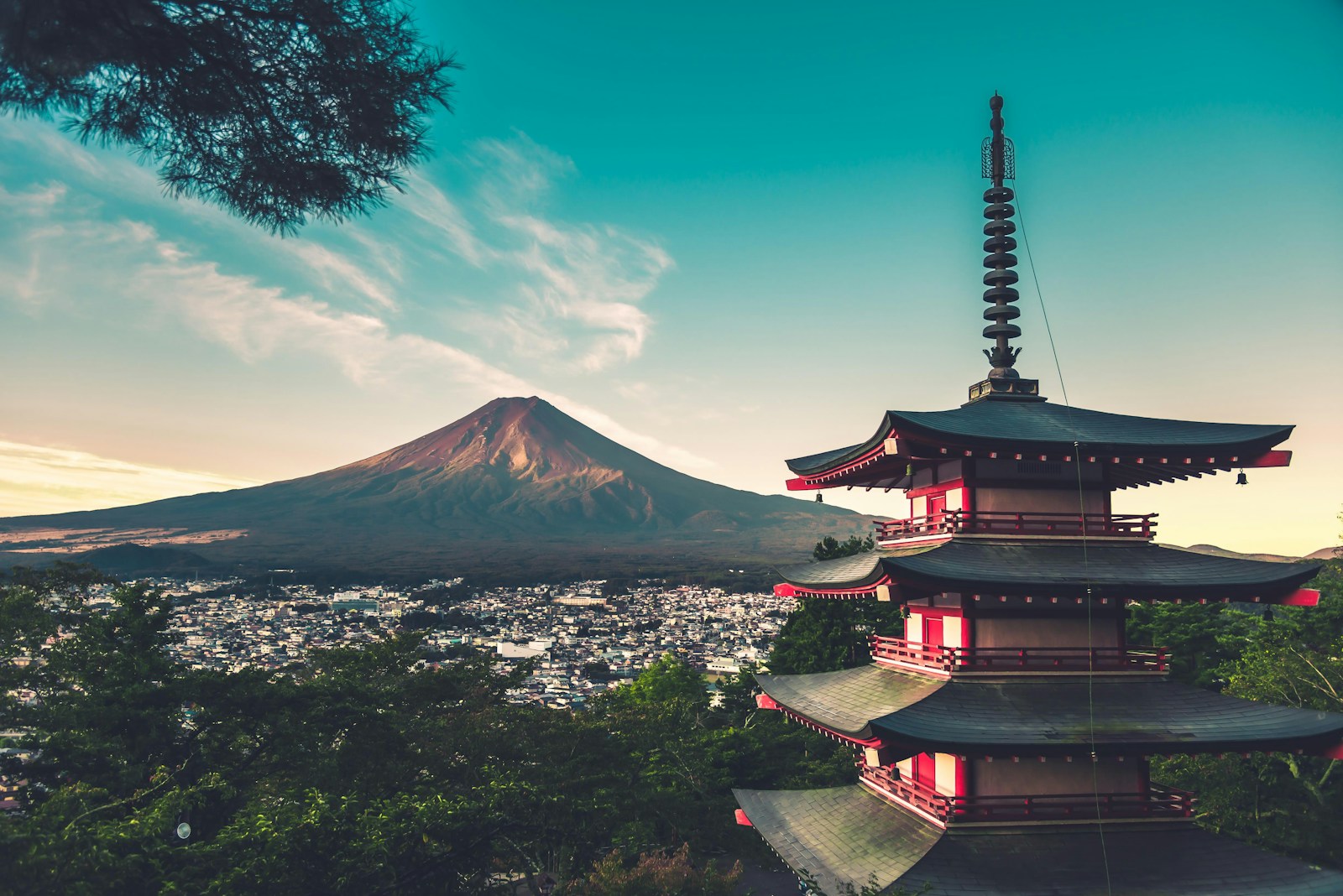
Kawaguchiko (Lake Kawaguchi) is the most popular base for seeing Mt. Fuji up close without climbing it. The iconic Chureito Pagoda, the lake, and the mountain together make one of the most photographed scenes in Japan.
But there's a catch: Fuji hides behind clouds more often than you'd expect. This guide covers how to get there, what to do, real costs, and how to deal with the visibility gamble.
01Getting there
Option A: Highway bus (recommended)
The most popular and cheapest way. Highway buses depart from Shinjuku Expressway Bus Terminal (Busta Shinjuku, right next to JR Shinjuku station). The ride takes about 2 hours direct to Kawaguchiko Station.
Cost: approximately ¥2,000 one way (¥4,000 round trip). Book via Highway Bus Dot Com (highwaybus.com) or Willer Express. Seats are comfortable, and most buses have Wi-Fi.
Option B: Train (JR + Fujikyuko Line)
Take the JR Chuo Line from Shinjuku to Otsuki station, then transfer to the Fujikyuko Line to Kawaguchiko. Total travel time is about 2.5 hours. Round trip costs approximately ¥4,130. If you have a JR Pass, it covers the JR portion (Shinjuku to Otsuki), but you'll pay separately for the Fujikyuko Line.
The bus is cheaper and more direct — no transfers, no confusion. Take the train only if you already have a JR Pass and want to save on the JR portion.
If you'd rather skip the bus logistics, this guided day tour ($85-130) covers Mt. Fuji views, Lake Ashi cruise, Hakone ropeway, and Gotemba Premium Outlets with round-trip transport from Tokyo included.
Check price on KKday →02Chureito Pagoda
This is THE iconic Mt. Fuji photo spot. The five-story pagoda framed with Mt. Fuji in the background — you've seen this image everywhere. It's the single most photographed view of Fuji, and for good reason.
How to get there
The pagoda is at Arakurayama Sengen Park, a 15-minute train ride from Kawaguchiko Station to Shimoyoshida Station on the Fujikyuko Line. From the station, it's a 10-minute walk to the park entrance, then 398 steps up to the pagoda viewpoint.
When to go
Sunrise and early morning give the best light and fewest crowds. During cherry blossom season (early to mid-April), the pagoda + Fuji + sakura combination is legendary — but so are the crowds. Arrive before 8am to get a good spot. Entry is free.
Don't skip this. Even if the rest of your Kawaguchiko day is cloudy, the pagoda itself and the park are beautiful. Just know that the 398 steps are real — wear comfortable shoes.
03Around Lake Kawaguchi
The lake area is spread out, so you'll need transport to cover the highlights in a day. The Retro Bus loop is your best friend here.
Retro Bus
The Kawaguchiko Retro Bus loops around the lake and connects all major spots. A day pass costs ¥1,500 and is worth it if you plan to make 3+ stops. Buses run every 15-20 minutes.
The Mt. Fuji Pass covers unlimited rides on Fujikyuko trains and buses in the Kawaguchiko area, including the retro bus routes. A better deal than buying individual tickets.
Get Mt. Fuji Pass (from $10, 1-3 days) on KKday →Mt. Kachi Kachi Ropeway
A short cable car ride up to an observation deck with panoramic views of Mt. Fuji and Lake Kawaguchi. Round trip costs ¥900. On a clear day, this is one of the best aerial views of Fuji you can get without hiking.
Oishi Park
A lakeside park famous for lavender fields (best in June-July) with Fuji as the backdrop. Even outside lavender season, it's a pleasant walk along the lake with unobstructed Fuji views.
More to see
Kubota Itchiku Art Museum features stunning kimono art in a beautiful building. The lakeside paths are great for walking or cycling — rental bikes are available near Kawaguchiko Station.
Get the Retro Bus pass and hit the ropeway + Oishi Park at minimum. If Fuji is visible, every stop becomes a photo opportunity. If cloudy, the ropeway and lakeside walking are still enjoyable.
Make Yamanashi's famous flat noodle stew from scratch at a cooking school near the lake. A fun hands-on break between sightseeing.
Book Hoto Noodles Class ($27, 2 hrs) on byFood →04The Mt. Fuji visibility problem
Here's what most guides won't tell you upfront: Mt. Fuji is hidden by clouds roughly 50-60% of days. You can travel 2 hours each way and see nothing but grey sky where the mountain should be.
Best visibility
October through February offers the clearest skies. Early morning (before 10am) is almost always better than afternoon, when clouds tend to build up. The day after rain clears is often excellent — the air is clean and clouds are gone.
Worst visibility
Summer (June-August) is the worst season for Fuji visibility. The heat creates haze and clouds that hang around the mountain all day. Rainy season (June-mid July) is especially bad.
Before you go
Check live webcams around Lake Kawaguchi the morning of your planned trip. Multiple webcams show real-time conditions from different angles. If Fuji is clear at 6-7am, it's likely to stay visible through the morning. If it's already hidden, consider switching to your backup plan.
Have a backup plan. If Fuji is hidden, pivot to Kamakura or Yokohama instead — both are easier to reach from Shinjuku and don't depend on weather for the experience to be worthwhile.
05Costs breakdown
- Highway bus (round trip) ¥4,000
- Retro Bus day pass ¥1,500
- Kachi Kachi Ropeway (round trip) ¥900
- Lunch ¥1,000 - 1,500
- Total ¥7,000 - 9,000
Chureito Pagoda is free. If you skip the ropeway and bus pass, you can cut costs to around ¥5,000-6,000 but you'll be limited in how much of the lake area you can cover on foot.
06Tips & warnings
Book early
Book the highway bus 1-2 weeks ahead, especially for weekends and holidays. Buses sell out fast. Weekday mornings are easier to book and less crowded at all destinations.
Timing
The first bus from Shinjuku departs around 7am. The last bus back from Kawaguchiko leaves around 7pm. Plan your day within this window — missing the last bus means an expensive taxi or an unplanned overnight stay.
Getting around
The lake area is spread out — walking alone between spots is slow and tiring. Use the Retro Bus or rent a bicycle. Don't assume you can walk everywhere like in Kamakura.
Weather
Kawaguchiko is at higher elevation than Tokyo and significantly colder, especially in the morning and evening. Bring an extra layer even in spring and autumn. In winter, it can be near freezing while Tokyo is mild.
A guided Mt. Fuji-Hakone day tour ($85-130) handles all the transport and covers both areas — including Lake Ashi, ropeway, and Gotemba outlets. Worth considering if you want to see Fuji without the DIY logistics.
Check price on KKday →Backup plan
If the morning webcam check shows clouds covering Fuji, don't force it. Pivot to Kamakura (temples + beach, no weather dependency) or Yokohama (food + waterfront, 30 min from Shinjuku). Both are great day trips that don't gamble on visibility.
An overnight stay doubles your chances of seeing Fuji — early morning visibility is best. Compare Kawaguchiko hotels and ryokan with lake views.
Search Kawaguchiko hotels on Zen Hotels →A clear-day Kawaguchiko trip is one of the best experiences in Japan. But it requires planning: book buses early, check webcams the morning of, dress warm, and always have a Plan B. Don't leave this to chance.
Adding Kawaguchiko to your itinerary? Recalculate how many days you need.
Open Trip Days Planner →Want the exact routes and maps?
Plan your trip with illustrated walking maps and ready-to-follow routes.
See the complete guide →

One-time payment · Instant download · Free updates forever