Hakone is one of the most popular day trips from Tokyo — a volcanic valley with hot springs, a famous loop course of scenic transport, and (on good days) Mt. Fuji views. This guide covers how to do it in one day, what it typically costs, and what to realistically expect.
01Getting there
All routes start from Shinjuku Station in Tokyo. You have two main options to reach Hakone-Yumoto, the gateway station to the Hakone area.
Romancecar (recommended)
The Odakyu Romancecar is a limited express with reserved seats, large windows, and a smooth ride. It runs directly from Shinjuku to Hakone-Yumoto in about 85 minutes. The cost is ¥2,330 one-way (base fare ¥1,220 + reserved seat supplement ¥1,110). Book seats in advance at Odakyu counters or the e-Romancecar website — window seats on the left side offer the best views.
Regular Odakyu express (budget option)
The standard Odakyu Line express takes about 2 hours from Shinjuku to Hakone-Yumoto with a transfer at Odawara. The fare is approximately ¥900 one-way. No reservation needed — just tap your IC card. This is the budget option but the seats are standard commuter-train style.
Hakone Free Pass
The Hakone Free Pass (¥6,100 from Shinjuku, ¥4,600 from Odawara) is the key to a Hakone day trip. It covers the round-trip Odakyu train fare plus unlimited use of all loop course transport: Hakone Tozan Railway, cable car, ropeway, pirate ship, and Hakone Tozan Bus. It does not include the Romancecar supplement (¥1,110 each way) — that's extra.
Buy the Hakone Free Pass. Take the Romancecar at least one way (outbound morning is best — you arrive fresh and save time). The pass pays for itself in a single loop.
If planning the loop course yourself feels overwhelming, this full-day guided tour ($85-130) covers Lake Ashi cruise, ropeway, and Gotemba Premium Outlets — all transport and logistics handled for you.
Check price on KKday →02The Hakone Loop Course
The "Hakone Loop Course" is the classic circuit that takes you through the entire Hakone area using a series of different transport modes. It's genuinely fun — each leg feels different, and the variety keeps things interesting all day.
Leg 1: Hakone Tozan Railway (~40 min)
From Hakone-Yumoto to Gora. This is Japan's oldest mountain railway, climbing through steep switchbacks where the train literally reverses direction three times. The zigzag ascent through forested mountainside is one of Hakone's signature experiences. Sit on the right side for the best views.
Leg 2: Cable Car (~10 min)
From Gora to Sounzan. A steep funicular that climbs the final stretch of mountain. Short but scenic. The Hakone Open-Air Museum is a worthwhile stop near Gora if you have extra time (separate admission ¥1,600).
Leg 3: Ropeway over Owakudani (~30 min)
From Sounzan to Togendai via Owakudani. This is the highlight of the loop — a gondola ride over volcanic steam vents with sulfur-yellow rocks and billowing white gas below. Stop at Owakudani station to see the vents up close and try the famous black eggs (kuro-tamago) boiled in volcanic hot springs. A bag of 5 costs ¥500. Legend says each one adds 7 years to your life.
Leg 4: Pirate Ship on Lake Ashi (~30 min)
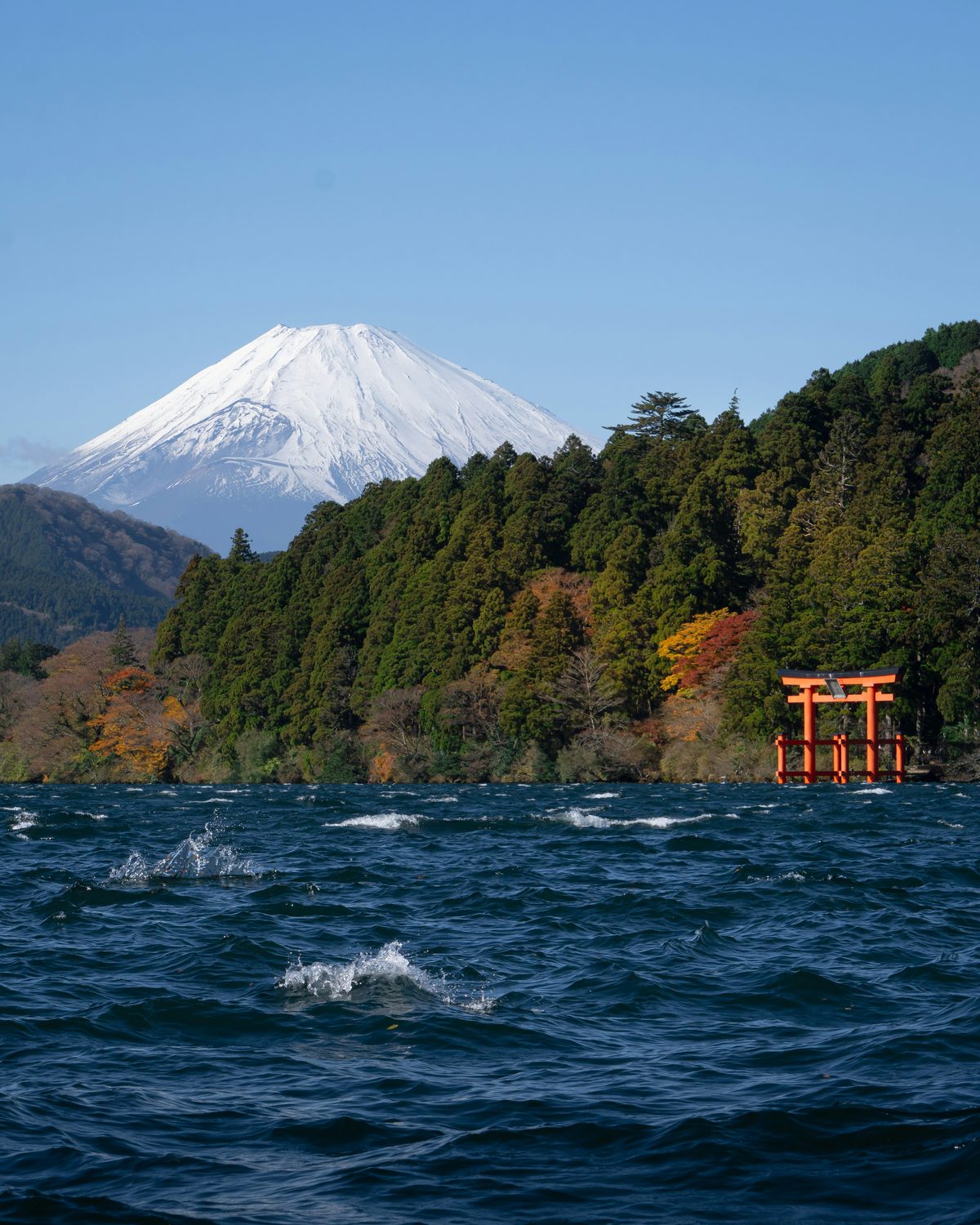
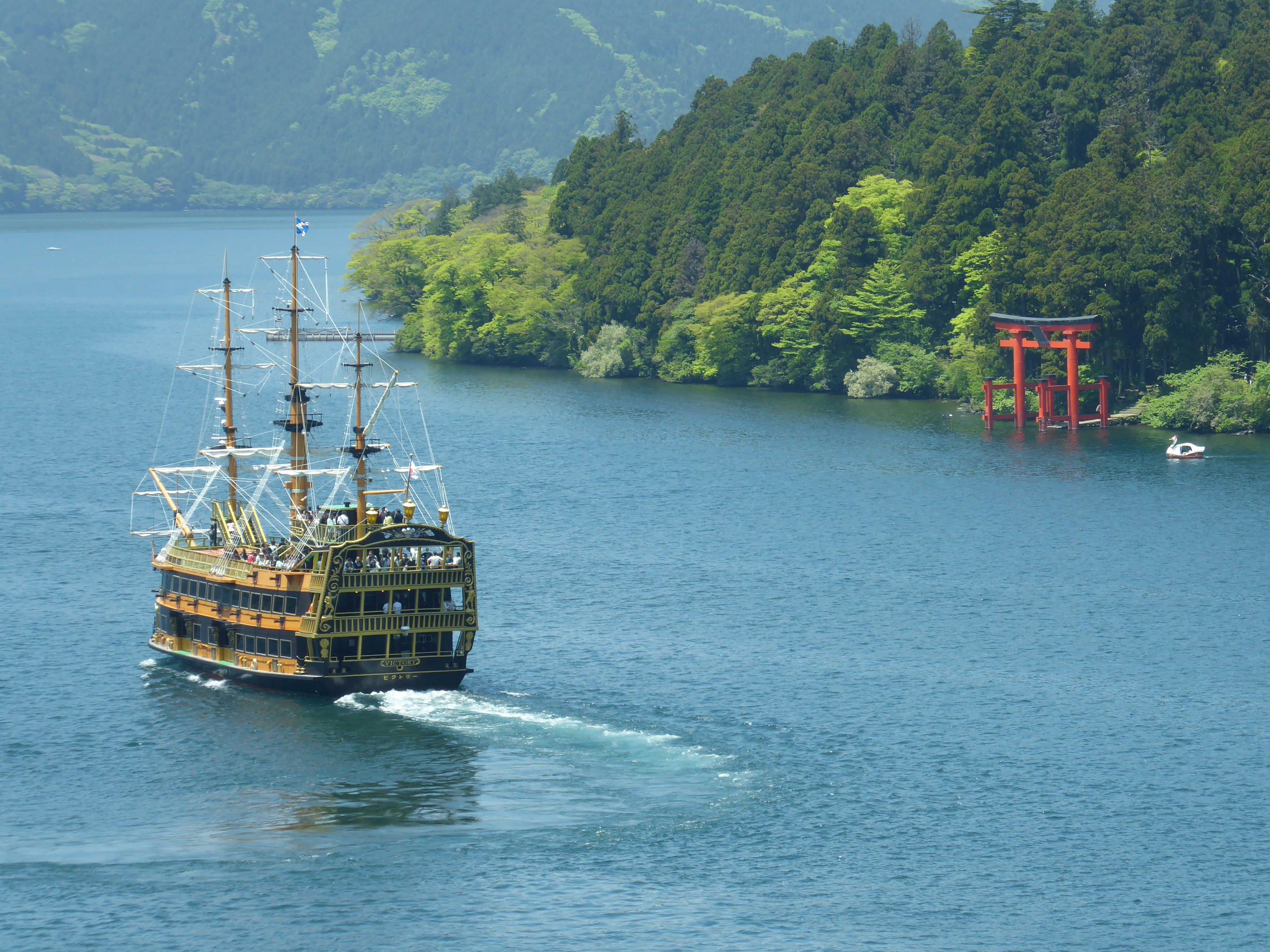
From Togendai to Hakone-machi or Moto-Hakone. These ornate pirate-themed ships cruise across Lake Ashi with Mt. Fuji as a backdrop (weather permitting). The ships are kitschy but the lake views are legitimately beautiful. On clear days, the Fuji reflection on the lake is stunning.
Leg 5: Bus back (~35 min)
From Hakone-machi or Moto-Hakone back to Hakone-Yumoto via Hakone Tozan Bus. This completes the loop. Along the way, you pass the famous Hakone Shrine torii gate on the lake — worth a quick stop if you get off early and walk.
The full loop takes approximately 5-6 hours including wait times and a stop at Owakudani. Start early to avoid rushing.
03Onsen experience
Hakone is one of Japan's premier onsen (hot spring) areas, and soaking in a natural hot spring is an essential part of the experience. Even on a day trip, you can enjoy day-use onsen at Hakone-Yumoto — do this after the loop course when your legs are tired.
Recommended day-use onsen
Tenzan Tohji-kyo — A popular outdoor onsen complex about 15 minutes by shuttle bus from Hakone-Yumoto station. Multiple outdoor baths in a natural forest setting. Day use around ¥1,300. Has a relaxed, authentic atmosphere.
Hakone Yuryo — A modern facility with private open-air baths and a common area. Shuttle from Hakone-Yumoto station (3 minutes). Day use around ¥1,500-2,050. Clean, well-maintained, good for onsen beginners.
Most day-use onsen in Hakone-Yumoto cost between ¥1,500 and ¥3,000 depending on the facility and time of day.
Tattoo policies
This is important for international visitors: many traditional onsen in Japan do not allow tattoos. Hakone Yuryo generally permits small tattoos if covered with special tape (available at the front desk). Tenzan Tohji-kyo is more relaxed about tattoos. If you have visible tattoos, ask at reception before paying — staff are accustomed to the question. Private baths (kashikiri) are always an option regardless of tattoos, typically ¥3,000-5,000/hour.
Don't skip the onsen — it's what makes Hakone different from every other day trip. Even 60-90 minutes of soaking after the loop course transforms the entire day.
04Costs breakdown
Here's a realistic budget for a Hakone day trip from Tokyo. All prices are per person.
| Item | Cost | Notes |
|---|---|---|
| Hakone Free Pass | ¥6,100 | From Shinjuku (or ¥4,600 from Odawara) |
| Romancecar supplement | ¥1,110 | Per direction — ¥2,220 for round trip |
| Lunch | ~¥1,500 | Soba, curry, or bento at Owakudani/Gora |
| Black eggs | ¥500 | 5 eggs at Owakudani |
| Day-use onsen | ¥1,500-3,000 | Tenzan or Hakone Yuryo |
| Total estimate | ¥9,000-12,000 | ~$60-80 USD |
Budget option: skip the Romancecar supplement (take regular express) and choose a cheaper onsen to bring the total down to around ¥8,000-9,000. The Hakone Free Pass is the one thing you shouldn't skip — buying individual tickets for the loop would cost significantly more.
05Mt. Fuji view reality
Let's be honest about this: Mt. Fuji is visible from Hakone roughly 40% of days. Clouds, haze, and humidity hide it more often than not. Many visitors do the entire loop course and never see Fuji at all.
Best chances for a clear view
Winter mornings (November-February) offer the best visibility — cold, dry air and clear skies. Early morning is always better than afternoon. After rain or strong wind, the air tends to be clearest. Summer is the worst season for Fuji visibility due to humidity and haze.
Check before you go
Search for "Hakone ropeway webcam" or "Owakudani live camera" before departing. Multiple webcams show real-time conditions. If Fuji is hidden at 7am, it's unlikely to appear later in the day.
Don't go to Hakone ONLY for Mt. Fuji views. Go for the loop course, the onsen, and the volcanic scenery. If Fuji appears, that's a bonus. If it doesn't, you'll still have a great day.
06Tips & warnings
Practical advice to make your Hakone day trip run smoothly.
Start early
Aim for the 7:00-8:00am Romancecar from Shinjuku. The loop takes 5-6 hours, and you want time for onsen before heading back. A 9:00am departure means you'll be rushing the second half of the day.
Ropeway closures
The Owakudani Ropeway closes in bad weather (strong wind, storms) and during periods of increased volcanic activity. This has happened multiple times in recent years. Check the Hakone Ropeway website on the morning of your trip. If the ropeway is closed, a substitute bus runs the route — functional but far less scenic.
Crowds
Weekends, especially in autumn (October-November) and Golden Week (late April-early May), are extremely crowded. Wait times for the ropeway can exceed 60 minutes. Weekdays are dramatically better. If you can only go on a weekend, start even earlier.
Consider staying overnight
If your budget allows, an overnight ryokan (traditional inn) stay transforms Hakone. You can do the loop at a relaxed pace, enjoy a private onsen in the evening, and have a kaiseki dinner. Ryokan start around ¥15,000/person with meals. Even a budget guesthouse removes all the time pressure.
Compare Hakone ryokan and hotels — from budget guesthouses to private onsen rooms. An overnight stay transforms the trip.
Search Hakone hotels on Zen Hotels →What to bring
Comfortable walking shoes, a small towel for onsen (or buy one there for ¥200-300), layers for mountain weather (it's cooler than Tokyo year-round), and cash — some smaller onsen and food stalls don't accept cards.
Hakone is worth the full day and the cost. The combination of scenic mountain transport, volcanic landscape, and a hot spring soak is unlike any other day trip from Tokyo. Just start early and don't pin all your hopes on Fuji.
Adding Hakone to your itinerary? Recalculate how many days you need in Japan.
Open Trip Days Planner →See how Hakone's ¥9,000-12,000 fits into your total Japan travel budget.
Open Budget Estimator →Want the exact routes and maps?
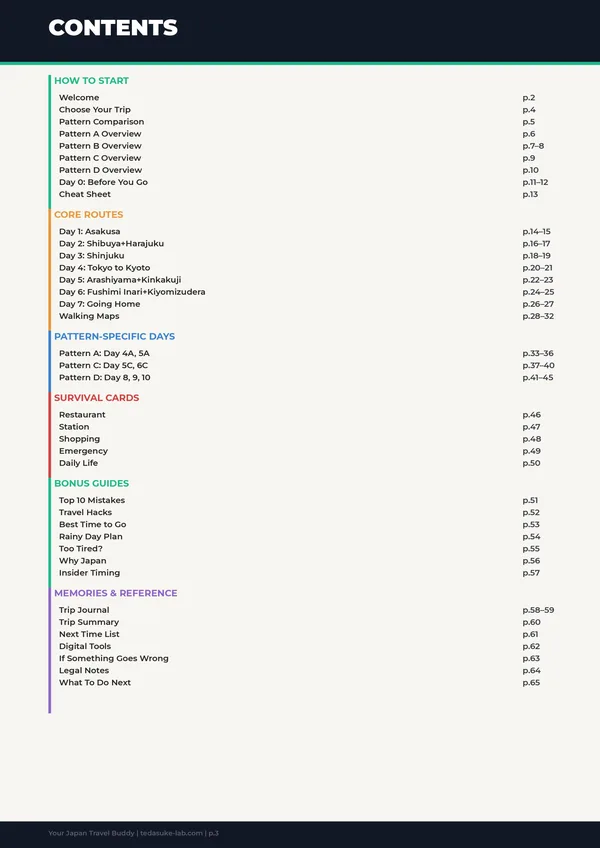
Plan your trip with illustrated walking maps and ready-to-follow routes.
See the complete guide →

One-time payment · Instant download · Free updates forever